Sak Yant Rituals
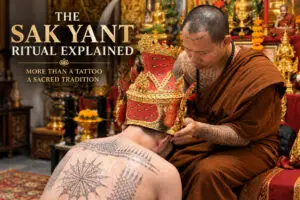
The Sak Yant Rituals Explained
A Sak Yant is often described as a traditional Thai tattoo, but this description only explains part of what takes place. Traditionally, the tattoo is connected to a ritual that includes an offering, sacred writing and chanting, the application of the design, and a final blessing. These elements are part of what gives a Sak Yant its traditional spiritual meaning and distinguish it from simply copying a traditional design onto the skin.
The exact ritual is not identical everywhere in Thailand. Different Monks and Ajarns follow different traditions, teachers and lineages, and the prayers, offerings, designs and ceremonies can vary. For this reason, there is no single ceremony that represents every Sak Yant tradition.
What Happens During Sak Yant Rituals?
Although the details differ between practitioners, a traditional Sak Yant generally follows a series of stages. The recipient is introduced to the Master, makes an offering, discusses the purpose or intention of the Yant, receives the tattoo while sacred prayers are recited, and then receives a final blessing. The ritual is therefore not something that happens separately from the tattoo. The tattooing, sacred writing, intention and blessing are traditionally understood as parts of the same process.
1. Preparing for the Sak Yant – The Wai
Before the Sak Yant process begins, the recipient normally performs a wai, the traditional Thai gesture of respect, toward the Master. The hands are placed together in front of the chest or face, often accompanied by a slight bow of the head. This simple gesture shows respect to the Master, their knowledge and the tradition they represent. In some traditions, three bows are made, representing respect for the
1) The Buddha
2) Buddhism and the Tradition of the Sak Yant
3) The teacher or Ajarn.
The wai is not simply a greeting. In the context of Sak Yant, it marks the beginning of the ritual and acknowledges the relationship between the recipient, the Master and the spiritual tradition.
Some tourist will confuse this offering of respect by bowing as a form of acknowledging you are below the Sak Yant Master. Many modern forms of self development do not like the idea of different classes, which is the wrong way to view the Wai. The Wai and the bowing are to pay respects to the knowledge, wisdom and skill of the Master – not as a sign of lower personal worth.
2. The Offering to the Master and Tradition
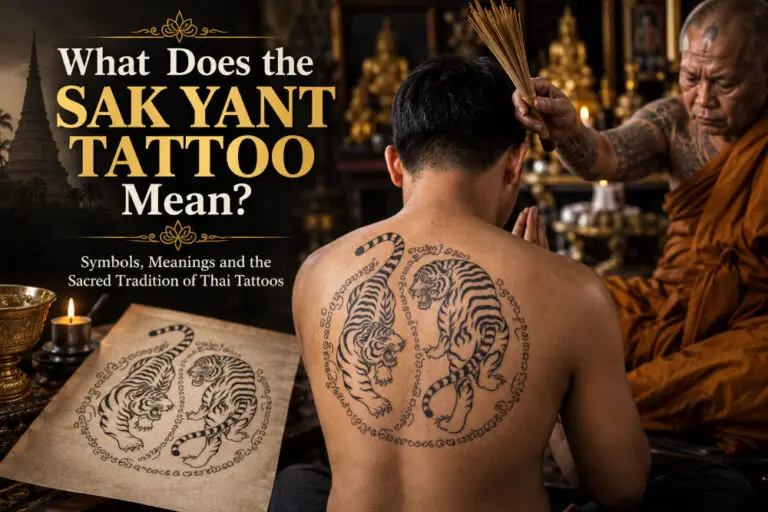
An offering traditionally takes place before the Sak Yant is applied. Flowers, incense, candles and other symbolic items may form part of the offering, although exactly what is used varies between traditions. The offering is not simply a payment for a tattoo. It is a traditional gesture of respect and acknowledgement toward the Master, the teacher lineage and the spiritual tradition. In some settings, the offering is placed on a tray and formally accepted by the Master before the tattoo begins.
The financial donation associated with a Sak Yant is a separate part of the experience. Traditionally, this supports the Master or the temple, while the offering itself has a ceremonial purpose.
3. Discussing the Intention of the Sak Yant
The meaning of a Sak Yant is not necessarily determined by the picture alone. Traditional Sak Yant combines three elements: the design, the sacred text or Khata, and the ritual and blessing. Before the tattoo, the recipient may explain what they are hoping the Sak Yant represents. This might include protection, strength, success, prosperity, confidence, good fortune or other personal intentions. The Master can then use their knowledge to determine or adapt the appropriate sacred text and blessing.
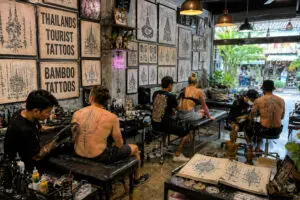
This is one reason why choosing a Sak Yant solely from a photograph found online can be misleading. Two tattoos that look similar may have different sacred writing, intentions and blessings. At Places like Sak Yant Chiang Mai or Sak Yant Bangkok they offer both a design and meanings book for selection of a Sak Yant of your choice, and discussions with staff who have been trained in the various meanings and can explain to the Master any specific desires or intentions for the individual.
4. The Sak Yant Tattoo Begins
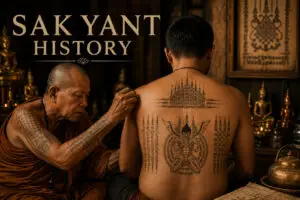
Once the offering and preparation have been completed, the Master begins applying the Sak Yant. Traditional Sak Yant is commonly associated with hand-poking using a metal Khem needle or rod, although individual Masters may use different tools according to their training and practice. During the tattooing, the Master may recite sacred prayers or Khata. The prayers are an important part of the traditional process and are connected with the intention of the Yant being created.
The recipient is normally expected to remain still and quiet while the Master works. This is not simply a practical requirement. The atmosphere is intended to remain respectful while the Master performs the tattoo and accompanying ritual.
5. The Khata, Sacred Writing and Chanting
One of the least understood parts of Sak Yant is the Khata. It can refer to sacred words, prayers or magical formulas associated with the Yant and may also refer to the sacred script incorporated into the design. Much of this knowledge is traditionally learned through the Master and teacher lineage rather than simply copied from a design found online. The writing surrounding a Sak Yant can therefore be more significant than its appearance suggests.
The Master may recite prayers while applying the tattoo, with the intention that the Yant is created according to its traditional purpose. The exact words and methods are not necessarily the same between different Masters or lineages.
6. The Final Blessing of the Sak Yant Rituals
The final blessing is one of the most important parts of the Sak Yant ritual. Once the tattoo has been completed, the Master performs a blessing using sacred prayers or incantations. Depending on the tradition, the recipient may hold the offering while the Master performs the blessing, followed by a further gesture of respect toward the Master.
Traditionally, the blessing is understood as activating or charging the Sak Yant according to its intended purpose. This is why the ritual does not simply finish when the last part of the tattoo has been completed.
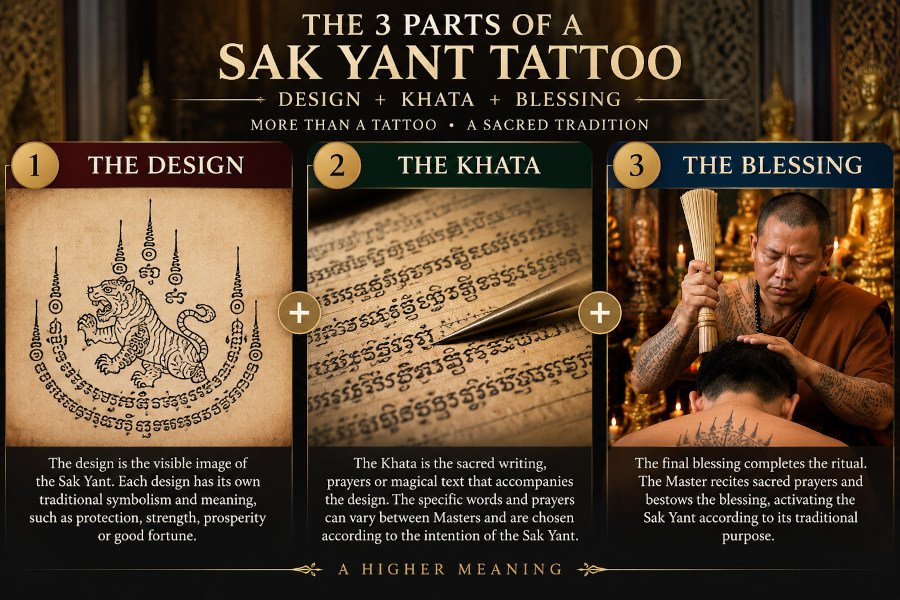
The Three Parts of a Traditional Sak Yant
The ritual can be understood through three connected elements:
The Sak Yant Design
The visible design represents the imagery and traditional symbolism of the Yant. Different designs are associated with different qualities and purposes, such as protection, strength, prosperity, confidence or good fortune.
The Sak Yant Khata
The Khata consists of sacred words, prayers and magical text associated with the Yant. The Master may use particular sacred writing or prayers according to the recipient’s intention and the tradition they have been taught.
The Sak Yant Blessing
The final blessing completes the ritual. Traditionally, it is performed by the practicing Sak Yant Master and is intended to activate the spiritual purpose of the Yant.
These three elements help explain why a Sak Yant cannot always be understood simply by looking at its design.
Sak Yant Rituals Can Be Different
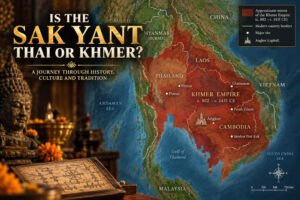
There is no single standardized Sak Yant ceremony followed by every practitioner in Thailand. A Monk working at a temple may follow a different procedure from an Ajarn working at a private Samnak. Masters from different regions and lineages may also use different designs, prayers, offerings and blessings.
This variation does not necessarily mean that one ceremony is authentic and another is not. Sak Yant has developed through different traditions over many generations, and practices have naturally differed between teachers and regions. The important question is whether the practitioner understands and follows the tradition in which they were trained.
Monk or Ajarn, Does the Ritual Change?
Both Monks and Ajarns can be trained Sak Yant practitioners. Many Ajarns spent part of their lives as Monks and continued studying Sak Yant after leaving monastic life. Others learned through established teacher or family traditions.
A temple experience may have a more formal religious setting and include additional temple customs. An Ajarn working from a Samnak can provide a more private environment and may have greater flexibility when discussing designs and personal intentions. The core elements of the Sak Yant ritual, including the offering, sacred text and blessing, can still be present.
Sak Yant Tattoo by Ajarn
- Former Monks, now full time Shamans
- Females OK
- Less formal and more relaxed situation
- Able to take photos and videos
- Sak Yants for personal desires allowed
- Wider range of Magical skills
- Include Thai Magic as well as Buddhist Blessings
Sak Yant Tattoo by Monk
- Unable to preform Sak Yant on Females at a Temple
- More formal approach, requiring stricter protocols
- Can not take photos of the Sak Yant getting done that include the Monks Face
- Sometimes busy preforming Monks duties at Temples
- Some designs are off limits due to personal over spiritual magical blessing
Why the Sak Yant Rituals Matter
The ritual is important because a traditional Sak Yant is not understood simply as artwork placed on the skin. Its significance comes from the relationship between the design, sacred writing, the Master, the recipient’s intention and the blessing.
This is also why two tattoos that look almost identical can have different meanings. The visible image may be the same, while the Khata, intention and blessing differ according to the person receiving it and the tradition of the Master.
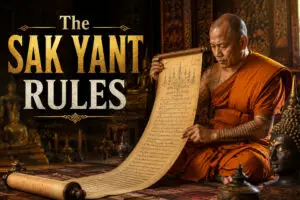
What About Sak Yant Rules?
Some Sak Yant traditions also include rules or principles that the recipient is expected to follow after receiving the tattoo. These can vary between Masters and lineages, although many are based around Buddhist moral principles such as avoiding killing, stealing, lying and harmful behaviour.
The purpose is traditionally connected with maintaining the intention and spiritual discipline associated with the Yant. There is no universal list of rules that applies identically to every Sak Yant, so recipients should ask their own Master about any specific requirements.
The Sak Yant Ritual Is More Than the Tattoo
For someone experiencing Sak Yant for the first time, it can be tempting to concentrate entirely on choosing the right picture. The design is certainly important, but it is only one part of the traditional practice.
The offering, the relationship with the Master, the sacred writing, the prayers during the tattoo and the final blessing all contribute to the traditional Sak Yant experience. Understanding these elements gives a much clearer picture of why Sak Yant has remained an important spiritual and cultural tradition in Thailand.
A Sak Yant should therefore be approached as more than a tattoo appointment. It is a traditional practice with its own history, etiquette, ritual and spiritual meaning, and the experience can differ considerably depending on the Master, lineage and setting in which it is performed.