What is a Bamboo Tattoo? – Thailands Tourist Tattoo
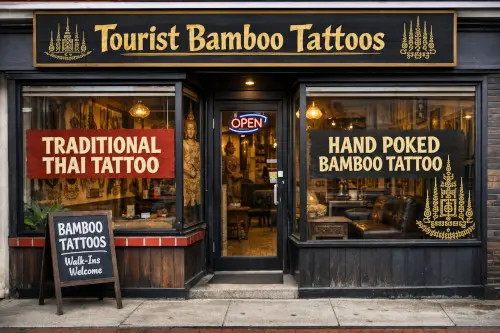 The term “Bamboo Tattoo” has become closely associated with Thailand. It appears throughout travel websites, tattoo shops and social media, often alongside images of traditional Thai Sak Yant designs. This has created a common assumption that a Bamboo Tattoo is simply the traditional Thai tattooing method used by Monks and Sak Yant Masters for centuries. That assumption is misleading.
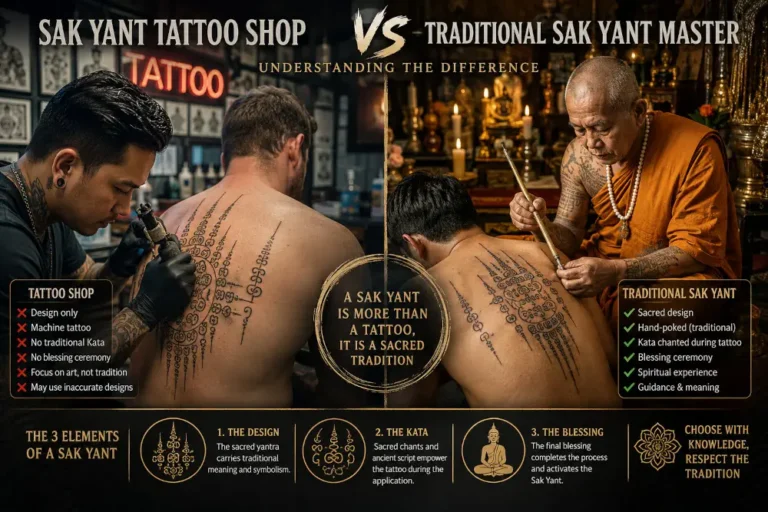
A Bamboo Tattoo, as the term is generally used today, describes ‘a method of tattooing’, not a spiritual tradition. In Thailand, the modern commercial use of the term is relatively recent, and it has become closely connected with the growth of tourism and the international popularity of Sak Yant. Understanding the difference matters, because a hand-poked tattoo from a tourist tattoo studio is not automatically a Sak Yant, and copying a sacred design does not reproduce the religious tradition behind it. ([Sak Yant Chiang Mai][1])
 The reason the term “Bamboo Tattoo” came about was because media reports of Angelina Jolie Sak Yant were incorrectly called a ‘bamboo tattoo’. When tourist would come to Thailand they would ask for what they had read in magazines. Tattoo Artists, were soon attaching a tattoo machine needle to a chopstick and painting “Bamboo Tattoo” on the shop window.
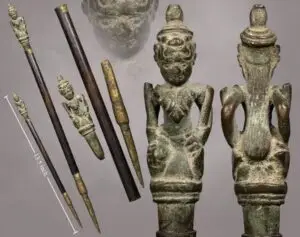
Historical accounts indicate that metal tools were used for traditional Thai tattooing. One frequently cited historical reference is Carl Bock’s *Temples and Elephants*, published in 1882, which describes Thai tattooing using a steel instrument. The important distinction is therefore between hand-poked tattooing as a technique and Sak Yant as a sacred Thai practice.
If you ask a Sak Yant Master about using Bamboo as a form of tattooing, they will tell you that they have always used metal rods and needles. This is reinforced as the ‘Khem’ (The tool used for making Sak Yants) is considered a magical implement and often passed down from teacher to student. Not something that can be done with a bamboo Stick.
1) Angelina Jolie’s 2003 Sak Yant Tattoo
In 2003, Angelina Jolie received her first Sak Yant tattoo in Thailand, bringing international attention to the country’s traditional tattoo culture. Her Sak Yant was applied using a traditional metal Khem, as had been customary among Sak Yant Masters for centuries. It was not applied with a bamboo needle.
 International media, however, often described the technique as a “bamboo tattoo,” creating a connection between Sak Yant and bamboo tattooing that had not previously existed in Thailand. As interest in Jolie’s tattoo grew, travelers began coming to Thailand looking for a similar experience and asking tattoo studios for “traditional Thai bamboo tattoos.”
As demand increased, commercial tattoo studios began offering hand-poked tattoos marketed as “Bamboo Tattoos.” Initially, these were often inspired by Sak Yant designs, but the technique was eventually used for many different tattoo styles. Over time, the term “Bamboo Tattoo” became widely associated with hand-poked tattooing in Thailand, even though it had little connection to the traditional Sak Yant practice from which the original designs and reputation had come.
2) Marketing the Traditional Hand-Poked Method as “Bamboo Tattoo”
The terms “Bamboo Tattoo” and “Traditional Thai Tattoo” are now frequently used together, particularly in commercial tourism marketing and online travel content by both …
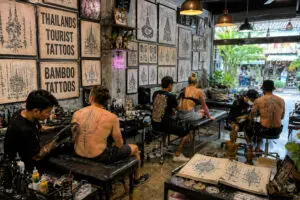
1. Tattoo artists and tattoo shops Tattoo studios were among the first to commercially promote the term “Bamboo Tattoo” after Western media began using it to describe Angelina Jolie’s Sak Yant in 2003. Many studios presented their modern hand-poked tattoo services alongside the history and imagery of Sak Yant, creating an association between a commercial tattoo service and the traditional spiritual practice.
2. Travel bloggers and vloggers. Travel writers and vloggers subsequently helped spread the terminology by describing their own hand-poked tattoos in Thailand as “Bamboo Tattoos.” Much of this content repeated information already published online without examining the historical distinction between a traditional Sak Yant and a commercial hand-poked tattoo. As a result, the two very different practices became increasingly confused in popular culture.