How to get a Sak Yant Tattoo in Thailand
How to Get a Sak Yant Tattoo in Thailand
Getting a Sak Yant Tattoo in Thailand: Guide to what happens during a traditional tattoo and how to act in the presence of a Monk
How to get a Real and Authentic Traditional Thai Tattoo in Thailand
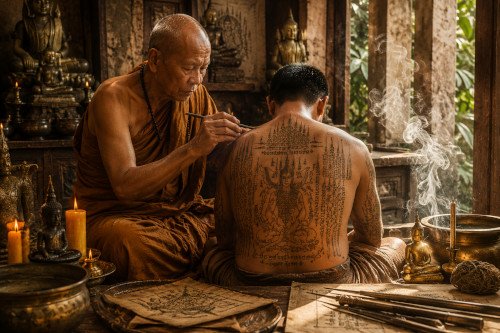 One of the biggest concerns for anyone considering a Sak Yant Tattoo in Thailand should be how to show the proper respect to the Sak Yant Master. Receiving a Sak Yant is not simply getting a tattoo. Traditionally, it is an experience involving a person who has dedicated years to learning the spiritual and magical traditions surrounding Sak Yant.
Unfortunately, many visitors do not understand the importance of the traditional protocols. Some later write about their experiences while focusing on how cheap the tattoo was, without understanding the difference between an offering and a donation. Others make claims about a Sak Yant Master being able to read their aura simply because they received a tattoo without speaking Thai. More concerning is the lack of understanding about the etiquette, traditions and signs of respect that should accompany an art form to which the Master has dedicated his life.
If you are going to receive a traditional Sak Yant, it is worth taking the time to understand what is expected of you. This guide explains how to behave, what to expect, and the important differences between receiving a Sak Yant from a Monk and receiving one from a Sak Yant Ajarn.
Monk or Ajarn: What Is the Difference?
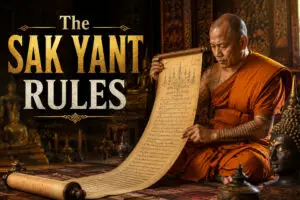
One of the most important distinctions is between a Monk who is still engaged in Temple duties and an Ajarn, who is generally a former Monk who has continued his Sak Yant training outside the Temple environment.
Getting a Sak Yant Tattoo from a Monk
- Usually done at a Temple
- Strict Temple Etiquette needs to be followed
- Wai to floor 3 times
- Generally no Females allowed Sak Yant at Temples
- Stricter rules regarding design and placement
- Deep Wai’s are preformed as sign of respect
- Rural and rustic conditions (No Air Con)
Sak Yant Monk
Generally a Monk (for the purpose of a Sak Yant Tattoo) is a Temple associated Monk that has duties engaging in the local community. The Monks role in Sak Yant Tattoos is only one of their duties and seeking a Sak Yant from a Monk can mean waiting along with other Thai’s, seeking advice, magic and blessings from the Monk.
A Sak Yant Tattoo from a Monk is done by donation (like all their duties) and a higher level of respect must be shown because you are at a Temple. However now days many Monks will not see the Westerner seeking a Sak Yant for a variety of reasons. Westerners seeking Sak Yants have been influenced by blogposts proudly claiming they only donated a few hundred Baht for their Sak Yant. This firstly shows a lack of respect for the time and skill of the Monk, who is primarily doing Sak Yants for donations to improve the Temple grounds.
Second, hardly any Monks speak English and are unable to converse with a non Thai speaking person about the deeper aspects of the Sak Yant. They do not like to provide a Traditional Thai Tattoo when there is little chance of the person getting it understanding what it means. Monks are also very reluctant to perform Sak Yants for Females on Temple grounds.
Getting a Sak Yant Tattoo from an Ajarn
- Usually done at Ajarns Samnak
- Less Strict Sak Yant Etiquette required
- Wai 3 times to your head is sufficient
- Females allowed to receive Sak Yant Tattoo
- Less strict rules regarding design and placement
- Normal Wai’s are preformed as sign of respect
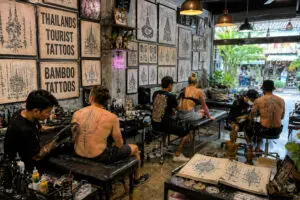
- More modern and comfortable rooms
Sak Yant Ajarn
The term ‘Ajarn’ is used to describe a learned person… similar to the term Professor or Master. When we refer to the term ‘Ajarn’ we are referring to a Sak Yant Master. Generally an Ajarn (or Sak Yant Master), is a former Monk that has taken their training in the Magical Art of Sak Yant and continued to provide the service to people after they no longer work within the Temple environment.
Getting Sak Yant Tattoo from an Ajarn means, they are free from the ‘touching female’ restrictions. Often Ajarns are open to additional training in the Sak Yant Tattoo and general tattoo arts. The Ajarn opens his Sak Yant temple to Thais and Foreigners alike and operates it like any other business and charges a fee for his expertise. The Ajarn is a highly respected and sought after adviser to both the normal Thai person and the Monk community
Sak Yant Ajarn’s, (like Monks) gain their magical power from meditation and following may spiritual rules for living a good and harmonious life. Ajarn’s will spend a considerable amount of their time in meditation, retreats, serving charities and living life to exceptionally high moral codes and ethics. They will take the responsibility of performing Sak Yant Tattoo’s at the same level as Monks do.
The Ajarn usually has more of a worldly interest outside of Temple life, more familiar with westerners seeking a Sak Yant, can speak better English and can be much more relaxed in accepting our lack of knowledge of protocols.
Getting a Sak Yant Tattoo from a Sak Yant Master
Thailand is a 95% Buddhist country, with the local people having a special reverence to caretakers of the Buddhist tradition which are usually the Monks and Temples that they use for worship. Because of the very special relationship the Thai people have with their Monks and Temples (called Wat’s) there is elaborate rules, regulations and etiquette that ensure proper respect is shown. Some of these rules are common sense and others might seem odd to the foreigner visitor. Never the less, being disrespectful to the Thailand Temples and Monks is an indiscretion you do not want to make.
Always keep in Mind, no matter how liberal the country is where you come from – there is a class system in Thailand – You are NOT EQUAL to a Monk or Sak Yant Ajarn. To compare this, think about how you would act towards a judge in a court of law, who looks as if they might let you off with a warning for some indiscretion. This is not the time or place to act on any convictions that you are just as equal to the person who is the Judge. In this situation you will be polite, courteous and show respect even if you personally do not hold such a belief.
Thai Temple Etiquette (When getting a Sak Yant from a Temple)
The Worship Area
Thai temples are usually comprised of a courtyard with the Temple itself, sometimes some housing (in bigger Temples) and small worship areas scattered around. The sheltered areas that contain Buddha statues are known as Bots. These areas are more sacred than other places in the temple, and a few rules of etiquette should be followed.
- Remove your shoes before entering if you haven’t already.
- Don’t get in the way of local people who are actually there to worship.
- Back away from the Buddha statue rather than turning your back.
- Don’t touch sacred objects in the worship area.
- Do not raise yourself higher than the image of Buddha (e.g., sitting on the raised platform for a photo).
The General Rules when Visiting a Thai Temple.
- Dress Modestly: Everywhere between the elbows and ankles should be covered, no low necklines for women, long skirts or long trousers in plain colors are recommended. Black is a funeral color so best to not wear black clothing.
- Remove Hats, Shoes, Sunglasses etc: Leave these at the entrance of the Temple.
- Turn Off Phones, Remove Headphones: Self explanatory, you are at a place of worship, texting your friends is NOT appropriate
- Do not Touch or Point or Raise yourself Higher to Buddha Statutes: Never touch, sit near, or climb on a Buddha statue or the raised platform. Get permission before taking photographs and never do so during worship.
- When exiting, back away from the Buddha before turning your back. Pointing at things or people around the temple is considered extremely rude. To indicate something, use your right hand with the palm facing upwards. When sitting, never point your feet at a person or image of Buddha.
- Women Don’t Touch Monks: Not in Thai Culture, including his own mother. Even doing so on accident (i.e., brushing against the robes in a crowded place) requires the monk to perform a lengthy cleansing process. At some temples women are not allowed to enter, there will be signs indicating this.
Before you get a Sak Yant Tattoo
Do not drink alcohol the night before. Thai people have exceptional sense of smell and your body will be unpleasant to be around. Not to mention the lack of respect doing this shows to the Monk.
Dress appropriately: You are going to a Temple and addressing a Monk. Wear clothing that covers the knees. Have a look around at Thai people and how they dress, you will very seldom see a man without a shirt (or wearing a wife beater) and you will never see a female wearing the loose and short skirts or pants tourists feel comfortable with in Thailand’s heat.
Shower before you go: Thailand is hot and most Thai people shower at least twice a day. It is well known among Thai people that westerners are used to showering once a day and never seem to consider changing this in the hot and tropical conditions. In other words, Thai people notice our body smells, so make sure you are clean, especially where the Sak Yant will be applied.
When you are in the presence of a Monk or Ajarn
Once you arrive at the Temple or Samnak, you will most likely find that you are not alone. You will take off your shoes and sit on the floor along with the other people there to see the Monk. While your Sak Yant is a special and unique experience for you – other locals will have a range of problems ranging from serious health issues to wanting a good luck blessing. Some will have a serious demeanor, and some will be the typical Thai’s with a big smile and be talking away to you in Thai.
When it is your turn follow the following etiquette
- When you greet a Sak Yant Master, you Wai (3 times to the ground for a Monk, 3 times to your head for an Ajarn) and keep your body lower, it is polite to be the first to Wai as is a sign of respect to the monk or elder.
1 for Buddha
2 for Buddhism
3 for Monks Respect - You do not stand above a monk as a matter of politeness. Try not to stand while the monks are seated.
- You will present your small “offering to the spirits” before the Sak Yant ceremony begins. The Offering is showing respect to the monk (Arjan) that is going to do Sak Yant for you. Its a way to show them that you believe in their magic power and trust their skills.
The Sak Yant Master will then
- The Sak Yant Monk or Ajarn will have a small accepting ceremony of the offering on behalf of the spirits.
- After the acceptance of your offering the Sak Yant Master will Ask you what design of Sak Yant you desire and why. If you wish to discuss your various options or ask for suggestions you do it at this time
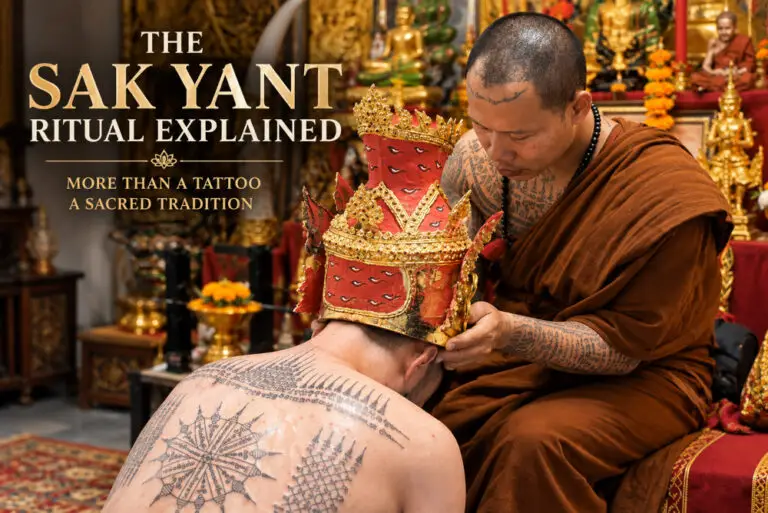
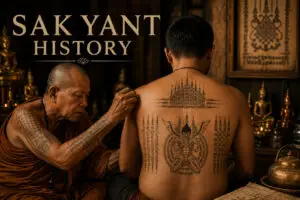
- The Sak Yant Monk/Ajarn will prepare for your tattoo, mixing the ink and sterilizing the needle. The Monk will sit in his chair and motion you to come over and begin your Tattoo
- During the Tattoo if you wish you can sit in a Prayer position
- After the Tattoo it is completed, you the receiver should turn and bow 3 times to thank the monk.
- Now is time for the blessing. You adopt a Prayer position while the Monk Blesses and activates your Sak Yant tattoo
How to Get a Sak Yant Tattoo in Thailand
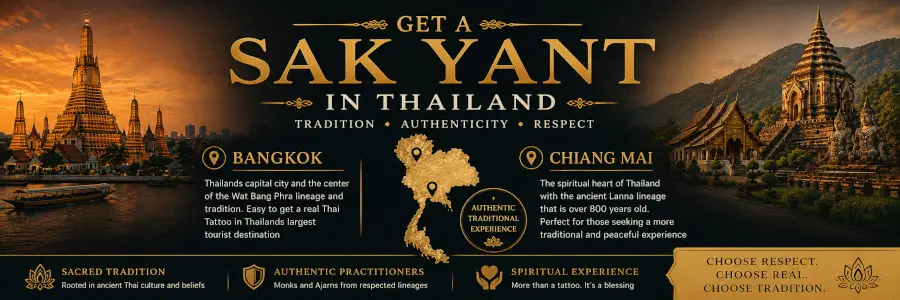
If you are wanting the best Sak Yant Tattoo Experience in Thailand. We recommend the following cities and services.